A First Visit to an Unfamiliar Theatre
A first visit to an unfamiliar theatre feels calmer when you check access details, allow time to find the right entrance and choose an interval plan.
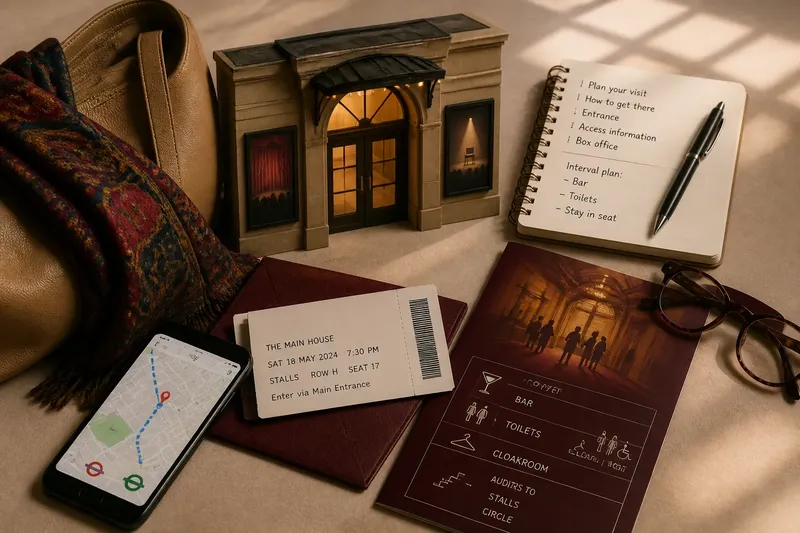
For a first visit to an unfamiliar theatre, the real question is usually simple: how do you arrive without spending the first few minutes wondering which door is yours? Start with the venue’s own visit information, then give yourself room to find the entrance and decide what you want to do during the pause. A little preparation can make the evening feel less like a small expedition with a ticket attached.
Check the venue’s visit information before you leave
Open the theatre’s official website and look for “Plan your visit”, “Access” or “Getting here”. Read the page for the venue you are attending, not merely the general information for a group of theatres. A company may use several spaces, and their entrances, foyers and access arrangements can differ.
Check the address against the ticket confirmation. A theatre may be inside a larger arts centre, shopping complex or historic building, while the address points to the surrounding site rather than the door you need. Note any venue-specific entrance directions, box-office location and opening information that affects your arrival.
Read the access information even if you do not expect to need a particular arrangement. It may explain step-free routes, lift locations, accessible toilets, hearing support or how to contact front-of-house staff. If you need an adjustment that is not clear online, contact the venue before travelling and ask a direct question. Staff can clarify what is available and what they need to arrange.
Check what the theatre says about latecomers, food and drink, cloakrooms, photography and mobile phones. These details vary, so treat the venue’s own instructions as more reliable than assumptions based on another theatre. You do not need to memorise every policy; save the page or make a brief note of anything that affects your plans.
Choose a route that leaves room for finding the door
Once you know the address and entrance, choose how to get there. If you are using public transport, check the nearest stop or station and the route from it to the venue. A map can show where the building sits without making the correct entrance obvious, particularly when a theatre faces a side street or shares a site with other organisations.
For a first visit, plan a little spare time for the part that is hardest to predict: recognising the building and finding its public entrance. That is different from arriving so early that you spend an hour watching the foyer. Allow enough room to pause, check a sign, ask someone or walk around the block without turning a minor detour into a race.
If you are driving, check the venue’s parking information and any access restrictions before setting off. Do not assume that a nearby car park belongs to the theatre or has the same entrance arrangements. For a taxi or a lift, use the venue’s stated drop-off point if it provides one, rather than asking a driver to guess which side of a large building is busiest.
Save the ticket where you can reach it without relying on a strong signal, and keep the confirmation email available as a backup. If the ticket is on a phone, make sure you know which app, message or account contains it. For a printed ticket, put it somewhere easy to find; rummaging through a bag at the door is not a recognised form of theatre warm-up.
Use the outside signs before choosing a door
When you arrive, look for the theatre’s name, the title of the performance or a sign directing ticket-holders to the entrance. A building may have separate doors for a bar, studio, rehearsal room or neighbouring business. The most impressive doorway is not necessarily the public one.
Check the ticket for the name of the space, especially if it gives a studio or room name alongside the theatre. Compare that wording with signs outside. If the ticket names a space within a larger venue, follow the theatre’s directions to the site first and ask staff where that particular room is, rather than wandering through closed corridors.
If you are unsure, ask a member of staff or an usher before joining a queue. Have the ticket ready and say the performance or space name. A short question is usually more useful than trying every door in sequence; doors, unlike people, rarely become friendlier after repeated knocking.
At the entrance, follow any queue signs and keep your ticket accessible. Staff may scan it at the door, direct you to the box office or check it further inside. If something on the ticket appears different from the sign, show it to a staff member and ask where to go before committing to a line.
Enter the building and settle the practical details
Once inside, orient yourself before moving towards the auditorium. Look for the foyer, box office, toilets and the signs for your seating area. If you need the cloakroom, accessible facilities or assistance finding your row, ask before the performance begins rather than hoping the answer will become obvious in the dark.
Check the seat information on the ticket: the level or section, row and seat number. Venue terms such as “circle”, “dress circle” and “stalls” are not used identically everywhere, so follow the signs at this theatre. If you cannot find the route, show your ticket to an usher. They can point you towards the right staircase or corridor.
Take a moment to deal with anything that would distract you once the performance starts. Use the toilet, silence your phone and put away food or drink in line with the venue’s instructions. If you have a coat or bag, decide whether to keep it with you or use the cloakroom; a crowded seat area is a poor place to discover that your belongings require their own allocation.
Before entering the auditorium, note where the exit leads back to the foyer and where staff are positioned. You need not study the room as though preparing a building inspection. Simply knowing how to ask for help and how to leave your row makes the space easier to use.
Decide what you will do during the pause
Before the performance starts, make a modest plan for the interval if the venue or production includes one. You might stay in your seat, stretch in the foyer, use the toilet or buy a drink. The useful decision is not whether the pause has a correct use; it is what would make the break comfortable for you.
Check the venue’s information for interval arrangements, including whether refreshments can be ordered in advance or whether there are particular facilities you may need. If you want a drink, find out where the bar is before the auditorium fills. If you would rather avoid a queue, bring no expectation that every other person has independently chosen to wait somewhere else.
Make a note of the auditorium entrance and your seat location. In a large building, the foyer can look different when people are moving in both directions. A ticket showing the section, row and seat is enough to get your bearings again; you do not need to memorise the route like a stage manager.
Say you arrive at a theatre inside a busy arts centre and your ticket names a smaller studio. You check the venue page at home, save its entrance directions and leave a little time to identify the right door. Inside, you ask an usher to point out the studio and decide that you will stay seated during the pause; the expected result is a straightforward route in and a break that does not require fresh decisions under pressure.
What should you do if plans change?
What if you cannot find the entrance?
Pause somewhere safe and check the venue’s directions or signage again. If the entrance still is not clear, contact the box office or ask a member of staff nearby rather than trying staff-only doors.
What if you arrive close to the start time?
Go directly to the stated entrance and tell staff that you are attending the performance. Late entry depends on the production and venue, so follow their instructions; do not assume you can enter the auditorium once the show has begun.
What if your ticket details do not match the signs?
Show the ticket to an usher or box-office member and ask them to confirm the correct space. Similar room names or sections can be easy to confuse, and staff can resolve the mismatch without you joining the wrong queue.
What if you need access assistance on arrival?
Speak to front-of-house staff as soon as you enter, or use the contact route the venue provides if you need help before arrival. Explain what assistance you need in practical terms, such as a step-free route or help locating a seat.
Keep the plan small enough to use
A first visit to an unfamiliar theatre does not require a detailed itinerary. Keep the address, entrance, ticket and any essential access information easy to retrieve; know whom to ask if the layout differs from what you expected. For the interval, settle on one simple preference and leave room to change it.
Once you are inside, the venue’s signs and staff are there to help you find your way. Checking their information ahead of time gives you a better starting point, while allowing a little room for the unexpected keeps the plan useful rather than brittle. The evening can then be about the performance, not a continuing search for the correct door.