The Interval Is Not a Required Verdict
Theatre interval choices need not produce a verdict: decide whether to talk, get a drink or sit quietly, then return to the play with room to think.
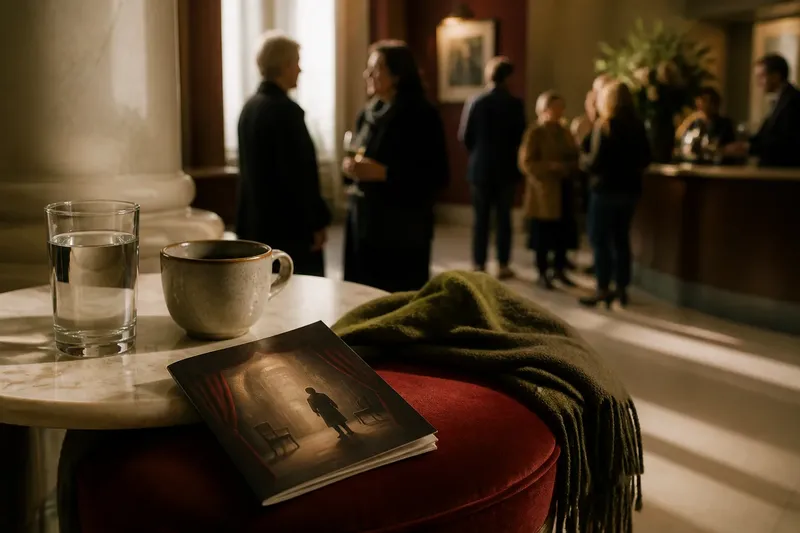
At the interval, someone beside you may start explaining what the final silence meant while you are still deciding whether to find the loo. Theatre interval choices need not produce a verdict. The useful question is what will help you feel comfortable and attentive when the performance resumes.
You can talk, queue for a drink, take a quiet moment or simply stretch. None of those choices proves that you understood the play better than anyone else. The interval is a pause, not an examination with refreshments.
Choose a pause that suits the evening
An interval serves practical needs as well as the structure of a performance. People may want to stretch, visit the facilities, buy refreshments, check in with a companion or have a quiet moment. The playwright has not set an examination at the exit doors.
Nor does the pause come with a standard emotional instruction. A comedy may leave you discussing a sharp turn in the story; a difficult drama may make conversation feel impossible. Waiting for a single correct reaction is rather like asking a coat peg to explain the weather.
Separate two questions: what is happening onstage, and what do you want to do during the break? You might be unsure about the first and perfectly clear about the second. “I want some air” is a complete interval plan, even if the play has just offered three possible meanings for a silence.
If you want to talk, keep the conversation open
Conversation can help when a scene has left you curious, amused or uncertain. Begin with something you noticed rather than a verdict: a change in lighting, a repeated phrase or a character’s sudden refusal to answer. That gives your companion room to offer another reading without making the exchange a debate with a winner.
Useful questions can be modest and specific. “Did you read that as an apology?” invites a response; “That was obviously an apology, wasn’t it?” quietly asks for agreement. You may discover that you noticed different things, or that one of you changed their mind while speaking. Both are ordinary responses to a live performance.
Say you and a friend leave a scene in which a character has put an untouched cup on the table. You read the gesture as anger; your friend thinks the character is frightened. You compare what in the acting suggested each possibility, then leave the question open until the play offers more to work with. The cup need not have its symbolic duties settled before the next act.
If your companion would rather not discuss the story, take that preference at face value. They may be concentrating, tired or simply enjoying the uncertainty. You can make a note for yourself, or wait until after the performance, when neither of you has to speak over a queue moving towards the bar.
If you need quiet, you do not owe anyone a discussion
Some performances make people want silence. Others are difficult to follow in the moment, and a running conversation may make the rest of the evening harder rather than clearer. Find a seat away from the busiest part of the foyer if one is available, or stay where you are and let your attention settle.
Quiet does not mean you have missed the point. A play may take time to unfold, and your first response may be physical or emotional rather than verbal. You do not need to turn unease, grief or surprise into a polished interpretation before the house lights dim.
If someone asks what you think, a simple answer is enough: “I’m still thinking about it,” or “I’d rather watch the next part before deciding.” These are not evasions. They describe how attention works when a story is still in progress.
If you need a practical break, handle that first
When you are thirsty, need the toilet or want to stretch your legs, attend to that before trying to decode the plot. The interval is there partly because sitting through a performance has ordinary bodily consequences. A confused interpretation will not improve because you postponed a drink while mentally rehearsing it.
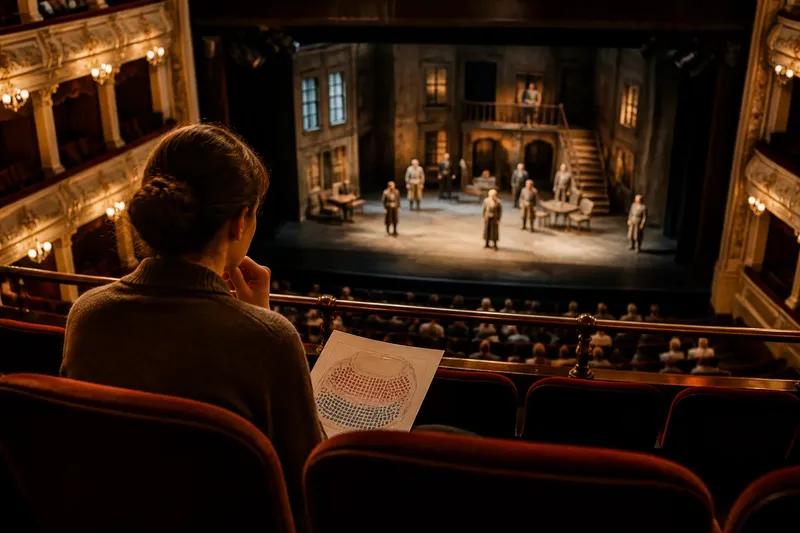
Check the theatre’s interval arrangements if you need directions to refreshments or facilities, or want to ask about an access need. An usher is a better source for venue directions than a stranger who looks as though they have memorised the foyer. If a queue is long, decide whether refreshments matter more than a few minutes of rest.
If you are attending with someone who may need a quieter space, a seat or assistance, agree in advance how you will spend the break. That small conversation can prevent one person setting off towards the bar while the other is still working out where to go. Venue arrangements vary, so check the theatre’s own information when a particular facility or access provision matters.
If the play feels confusing, wait for more evidence
An interval can arrive before the story has explained its setting, motives or timeline. That does not necessarily mean the production has failed to communicate, or that you have failed to keep up. Some plays deliberately hold back information; others make an unusual structure part of the experience.
Choose one or two concrete details to carry into the next part. You might remember which character knows about a letter, what changed in the room or which question remains unanswered. Avoid building a complete theory from a single line if the next scene may alter its meaning.
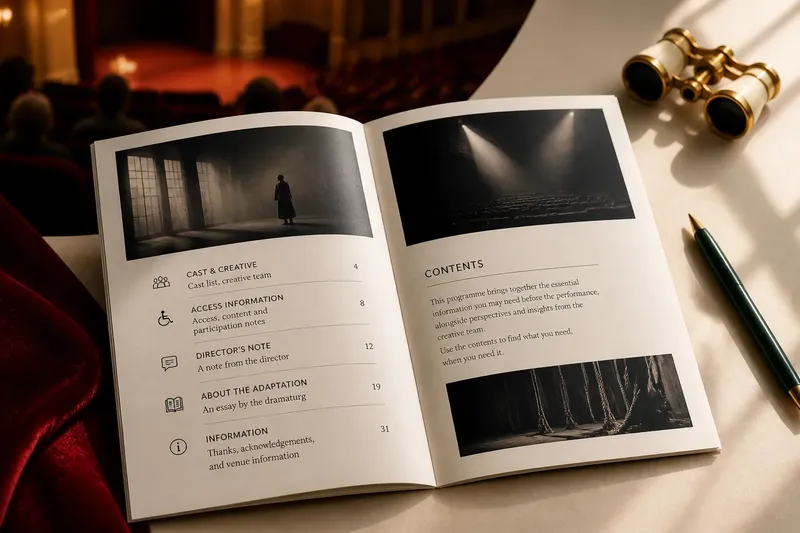
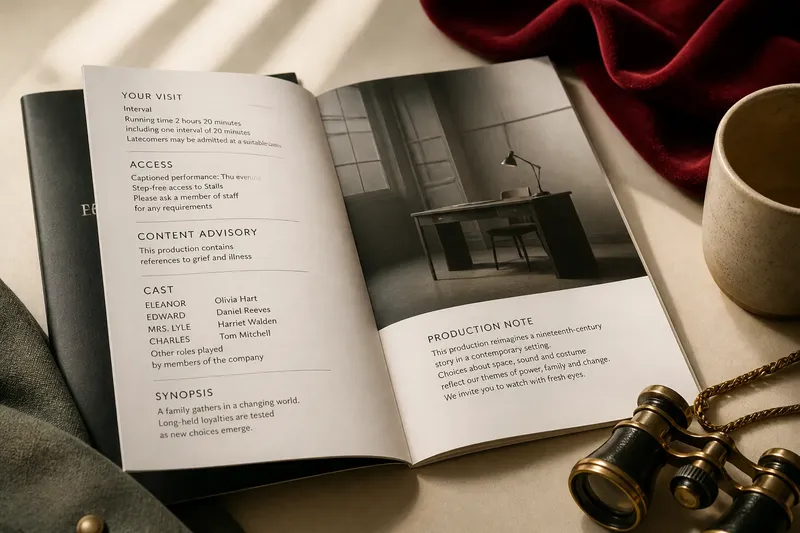
If you have a programme, use it as a source of names and production details, not as a compulsory answer key. A cast list can help if you have lost track of who is who, but reading ahead may reveal information the performance has not yet given you. Decide whether that would help or spoil the uncertainty you are enjoying.
If the performance has unsettled you, prioritise steadiness
A scene can touch a personal nerve without asking you to explain why to the people around you. If you feel overwhelmed, move to a quieter part of the foyer if possible, sit down or speak to a companion or member of staff. The next act does not require you to prove that you are comfortable.
You can decide not to return, or leave the auditorium during a later scene if you need to. Theatre-going is not a pledge to endure every moment. If you are unsure about leaving, ask an usher about the venue’s arrangements rather than making a difficult decision in a crowded doorway.
When you do return, there is no need to tell your neighbours why you stepped out. Settle in as quietly as you can and follow the performance from where it is. The story will continue without a report on your interval.
What do the common interval questions mean in practice?
Do I need to understand the first half before the interval ends?
No. Keep track of what you noticed and let the next part add information. Some productions become clearer in retrospect, while others leave questions deliberately open.
Is it rude to avoid talking about the play?
No. You can say you would rather watch the second half before discussing it, or turn your attention to a practical task. A companion’s wish to talk does not oblige you to provide a verdict.
Should I read the programme during the break?
Only if it will help rather than distract you. A cast list can clarify names, while production notes or plot details may disclose material you would prefer to discover onstage.
What should I do if my companion and I disagree about a scene?
Let both readings stand until the performance gives you more to consider. Discuss what each of you noticed without insisting that the other person adopt your interpretation.
Return with attention, not a finished theory
As the interval ends, check the time and make your way back before the house lights change. Put away anything that could distract nearby audience members, and let a companion know if you are still finishing a conversation. These small courtesies make it easier for everyone to settle without turning the break into a second performance.
Theatre interval choices are simply ways to use a pause within an evening that has not finished speaking. Choose the break that fits your needs, carry forward whatever caught your attention and allow the next scene to change your mind. You can decide what the play meant later, when it has actually reached its end.