Why Theatre Programmes Put Information in a Particular Order
Why theatre programmes order information as they do, and how layout, house style and production needs shape what readers see first.
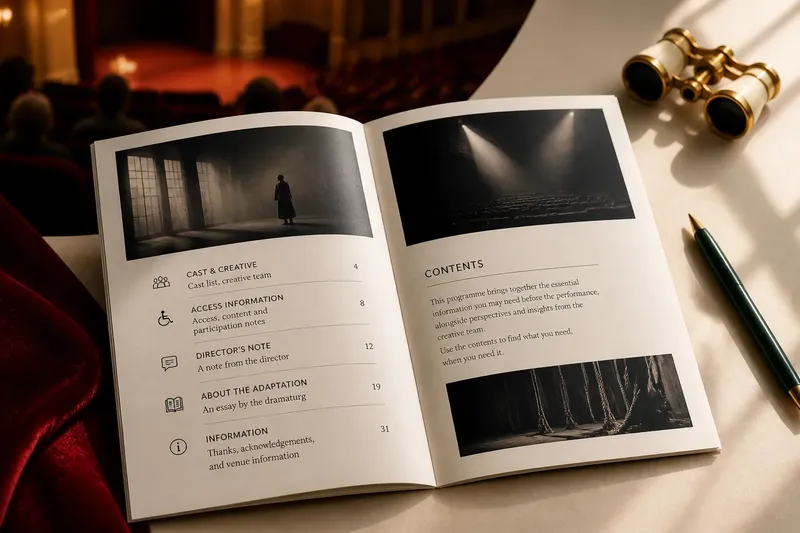
Why does a theatre programme put the cast list before the director’s note, or tuck production essays behind the practical details? The order of information in theatre programmes often reflects competing needs: readers want quick bearings, contributors need room to explain their work, and the booklet has to fit a particular production and house style.
Theatre programme order balances competing needs
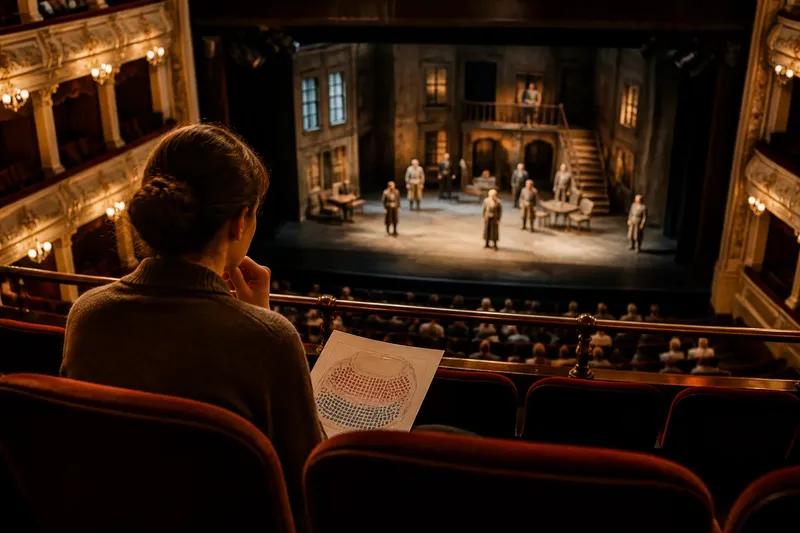
A programme may be opened in a bright foyer, glanced at in a dim auditorium or revisited after the performance. Its sequence has to serve these different moments while making room for names, notices and longer contributions. That is less like a secret code than a desk drawer: frequently used things tend to sit within easy reach, though the drawer’s owner may have other plans.
The opening pages commonly establish the production’s identity and give readers a route to useful information. Later pages can accommodate material that takes longer to read or makes more sense with the performance fresh in mind. This is a practical convention, not a rule that every theatre follows.
House style shapes what appears near the front
Theatre companies often use a consistent programme template across productions. A fixed order makes familiar details easier to locate, helps staff prepare each edition and gives the publication a recognisable shape. A production-specific notice may still need to move forward if audiences should see it before the performance begins.
Space and supplied material also affect the sequence. A compact booklet may place several kinds of information together, while a longer publication can give essays or interviews separate sections. Contributors may deliver text at different stages, and the editor must fit it around the pages already assigned to credits, images and notices.
These constraints explain why sequence does not always express a deliberate judgement about importance. A short note may appear early because it fits the available space; a substantial essay may be later because it needs room. Page order gives clues about how a booklet is organised, but it cannot by itself establish why a particular choice was made.
Editors distinguish reference material from longer reading
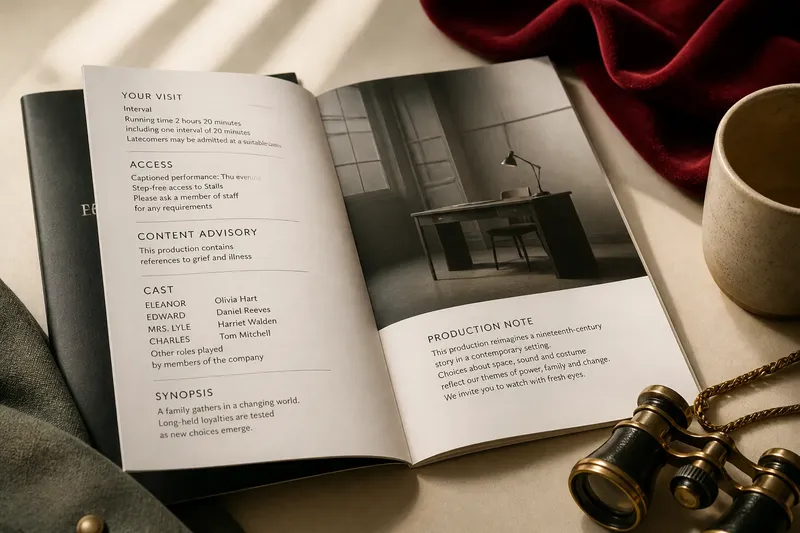
Some information is easiest to use when it is grouped and predictable. Cast and creative credits are reference material: readers may want to find a name quickly, either before the curtain or during a pause. Notes and essays are different. They offer context or interpretation, and usually ask for more sustained attention.
Production teams may arrange those forms so readers can move between them without treating every page as part of one continuous argument. The sequence can separate factual identification from contributors’ perspectives, even though both have a place in understanding how a performance was made.
Say you are preparing an invented programme for a touring production. The starting material is a title, cast and creative credits, an access notice, a short director’s note and a longer essay about the adaptation. The editor puts the title, credits and access notice first, follows them with the director’s note, then places the essay later; the expected result is that readers can locate essential details quickly without the longer discussion dominating the opening pages.
Production needs can change the usual sequence
A notice that affects how audiences enter or experience the room may take priority over a standard template. This could include information about audience participation, a change to the usual performance arrangement or a feature of the production that readers should know before it starts. The reason is functional: the information is useful only if people encounter it in time.
Other material can be placed later because it is not needed to prepare for the event. An essay about the source text, a discussion of design choices or a contributor’s account of the process may reward attention after the performance. The order helps the editor accommodate different reading purposes; it need not rank those contributions by artistic value.
What can programme order tell you?
Does the first page show what the theatre considers most important?
Not necessarily. Early placement may reflect usefulness, a standard template or the space available, rather than a statement of artistic priority.
Why do some programmes put essays at the back?
Longer essays may require more space and sustained attention than credits or notices. Placing them later can keep quick-reference information easy to find without implying that the essays matter less.
Can the order tell me who wrote or selected each section?
It may help you identify distinct contributions, but order alone is not evidence of authorship or editorial responsibility. Check the byline or publication credits for that information.
Why might a notice interrupt the usual layout?
A production-specific notice may need to reach readers before they enter the auditorium or the action begins. In that case, immediate usefulness can take precedence over the normal house sequence.
Use sequence as a clue, not a verdict
When a section appears in an unexpected place, look at what the placement lets readers do. A front-page notice may be there because it affects preparation; a later essay may be there because it invites a slower reading. If the reason is not clear, the programme may simply be following a template or accommodating the material it received.
- Notice where the cast list appears: if it is easy to find near the opening, use it as a quick reference; if it is grouped elsewhere, follow the contents or page headings instead.
- Check whether an access or participation notice appears before the performance information: if it could affect your experience, read it before taking your seat; if it does not apply to your needs, continue to the sections you want.
- Look for bylines beside essays and notes: if a contributor is named, treat the text as that person’s perspective; if no byline appears, avoid assuming who wrote it and consult the publication credits.
- Compare section headings with their placement: if a long essay sits later, turn to it when you have time; if you want only a particular fact, use the headings to avoid reading unrelated material.
- Check for a contents page or clear page labels: if one is present, use it to reach the required section; if not, scan headings and page furniture rather than treating the sequence as a narrative.
- Notice whether the programme follows a familiar house format: if the same sections recur in a similar order, assume the template may explain the arrangement; if this production departs from it, check whether a production-specific need accounts for the change.
The order of information in a theatre programme is best read as an editorial arrangement shaped by readers, production needs and the limits of the page. Knowing that makes it easier to find what you need without mistaking placement for a verdict on what deserves attention.